Perspective
When to move from spreadsheets to an application
Spreadsheets are ideal for a quick start, but once several people update the same file, a hidden cost appears. The signs that it is time to move on.
Verimel2 min read
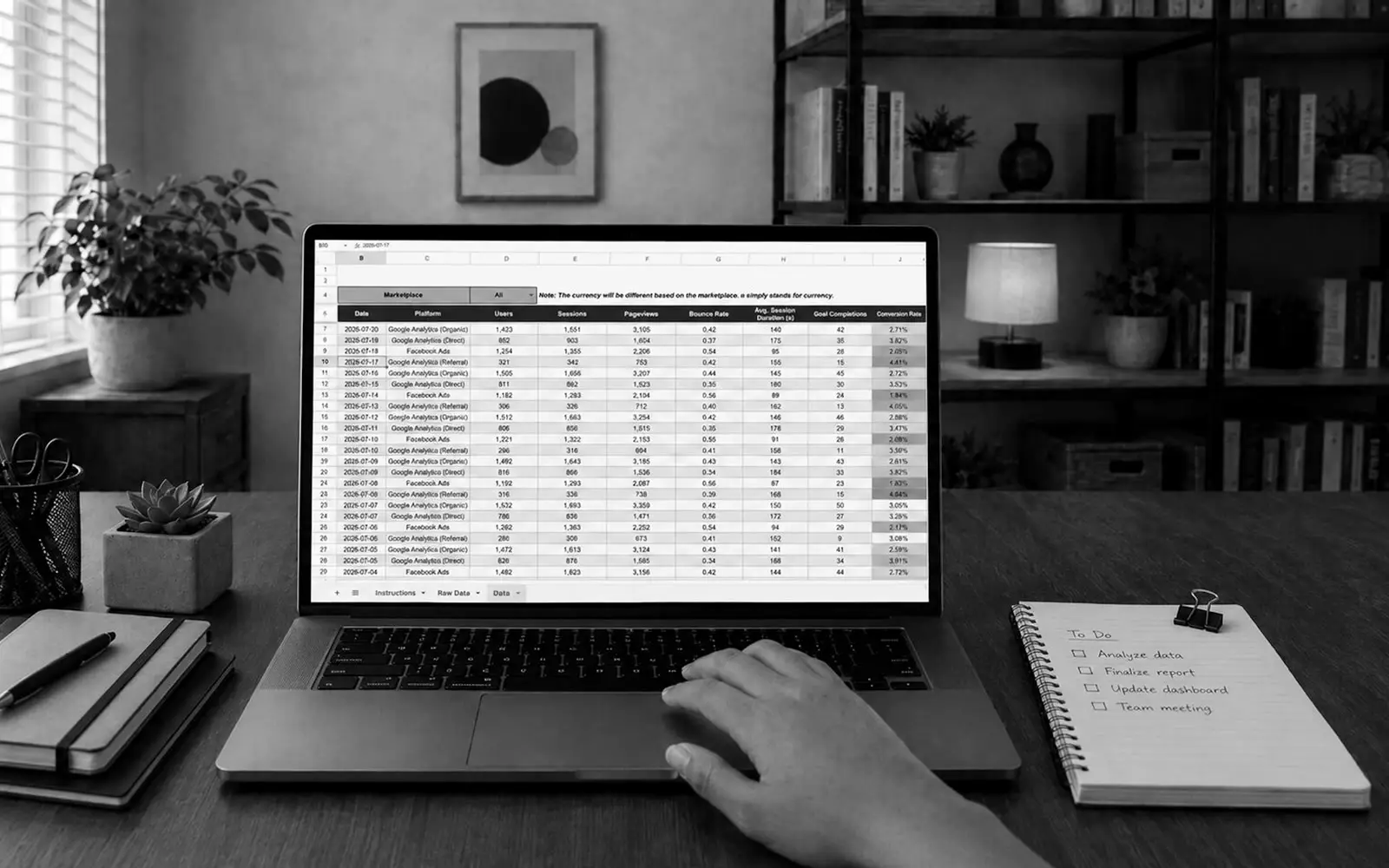
Many internal processes begin with a spreadsheet, and that is often the right choice. A spreadsheet is flexible, everyone knows how to use it and it can be adapted in minutes when a new need appears. The trouble starts when the spreadsheet becomes the carrier of a growing process.
Signs you have reached the limit
If several of the following happen at once, it is time to consider a move:
- Multiple copies of the same file are circulating and people argue about which one is current.
- A broken formula in one cell makes the month-end report wrong, and it takes days to notice.
- Nobody knows who changed which row and when.
- Part of the information is in the spreadsheet, part in email and part in someone’s memory.
- Everyone with access to the file can see all the data, although some of it should be visible only to certain people.
The hidden cost
The cost of spreadsheet-based processes shows up not in licence fees but in effort. Copying, checking, correcting and re-sharing data takes regular time every week. That time is rarely recorded, because it is seen as a natural part of the job.
An application does not remove this effort entirely, but it lets the system take over the repetitive part: data is entered once, rules are enforced by the application and the report is ready when it is needed.
What to watch during the move
Moving from a spreadsheet to an application is not the same as putting the spreadsheet on a screen. A few topics need fresh thought:
Data structure. Spreadsheet columns are usually added over time and are often inconsistent. The move is a good chance to sort out which information is really needed.
Roles and permissions. Who enters data, who approves and who only views? Spreadsheets rarely make this distinction, and it is one of the most valuable gains of an application.
Historical data. Decide early how much of the old data will be moved and how it will be cleaned.
Export. The spreadsheet view teams are used to should not disappear completely. Exporting from the application to a spreadsheet makes the transition easier.
Not every spreadsheet needs to become an application
Spreadsheets used by one person, for a short time or for experiments can stay as they are. The decision should depend on how many people the process affects, how critical the data is and how expensive errors are. The right question is not “Can we turn this into an application?” but “What does it cost us to keep this process in a spreadsheet?”